
The Money Arrived Before the Measurement Did
The UK government committed more than £900 million in June 2025 to major sporting events and grassroots sport under its Plan for Change, part of a £400 million grassroots facilities program running from 2025 to 2030, according to GOV.UK figures published in 2026. An £85 million tranche for 2026/27 opened in January 2026, and 991 projects were funded in 2025/26 through the Multi-Sport Grassroots Facilities Programme. That is the largest sustained grassroots capital commitment in a decade, and every pound of it is allocated, reported and defended using the same participation data governing bodies have used since 2015.
That participation data comes from Sport England's Active Lives Adult Survey, a self-completion questionnaire, at the same moment the global sports technology market is projected to grow from $34.25 billion in 2025 to $68.70 billion by 2030, a 14.9% compound annual rate, according to MarketsandMarkets. Capital is flooding into instrumenting sport with sensors and AI. Almost none of that investment is flowing into the layer that would let a grassroots governing body prove, session by session, that its funding actually produced activity rather than simply claim it, based on what people say they did months later.
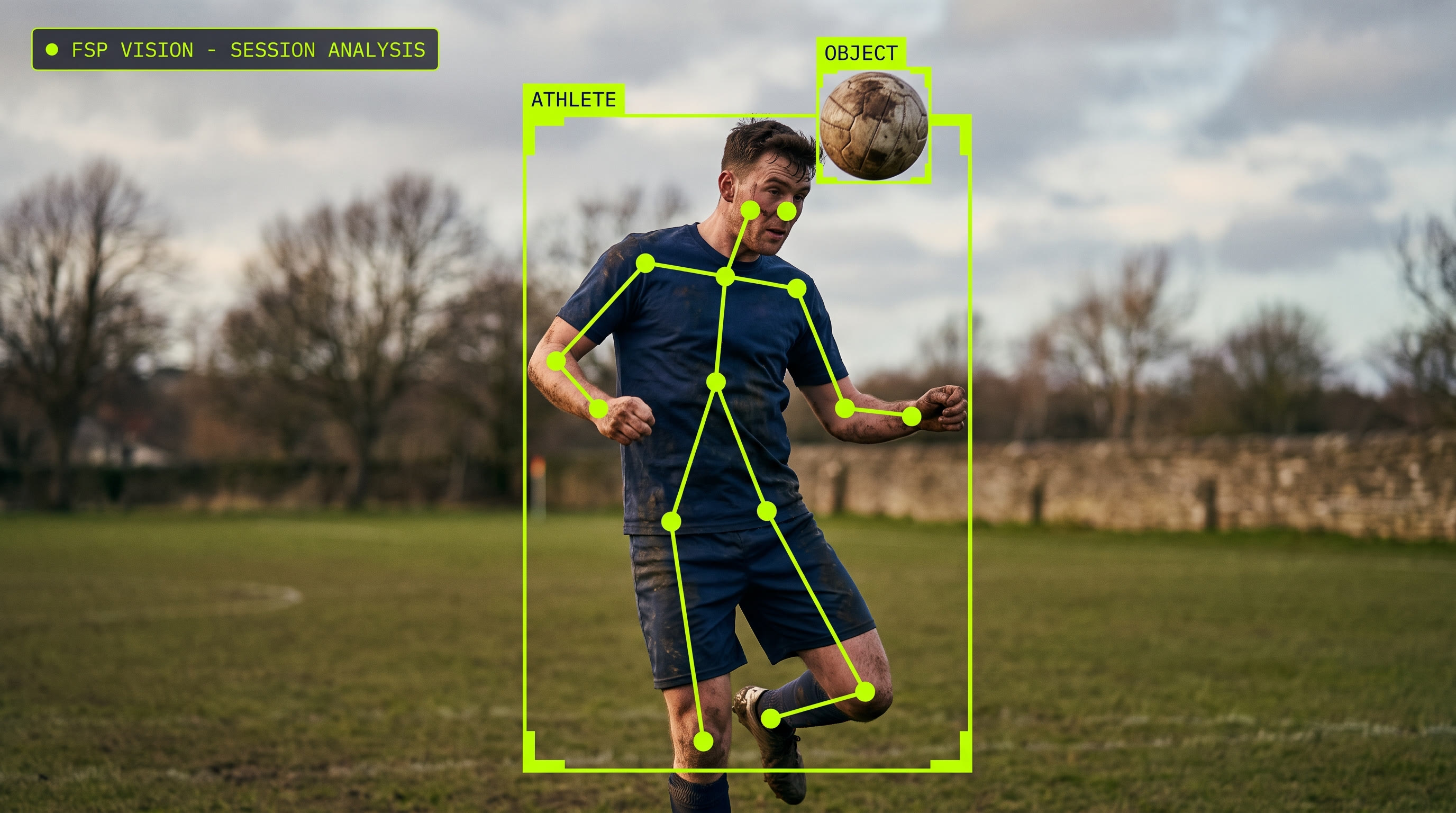
That is the argument this report makes. AI-verified session data, not self-reported surveys, is the missing infrastructure layer for grassroots sport. It is the difference between a funding application built on estimates and one built on evidence a minister, an auditor or a sponsor can check line by line. The rest of this report traces where that gap sits today, who is already closing it, and why the money is already pointed in the right direction.
That participation data comes from Sport England's Active Lives Adult Survey
The National Activity Number Is a Well-Sampled Guess
Sport England's Active Lives Adult Survey, covering November 2024 to November 2025 and published in April 2026, found that 64.6% of adults, 30.9 million people, met the Chief Medical Officers' guideline of 150 minutes of moderate activity a week. That is up 859,000 people year over year and 3.3 million since the November 2015-16 baseline. Every one of those figures, the headline number ministers quote and the number that shapes where facility money goes, comes from a self-completion survey. No device recorded a single one of those minutes; a respondent recalled and reported them.
That reliance on memory has a measurable cost. Bürki and colleagues, publishing in JMIR mHealth and uHealth on August 27, 2025, compared wrist-worn accelerometer data against self-reported questionnaires across 16,000 UK Biobank participants. The self-reported measure overestimated and biased physical activity relative to the device-measured figure, distorting the associations researchers then draw with cardiometabolic markers such as BMI and pulse rate. If self-report skews the science, there is no reason to assume it holds steady in a national policy survey built on the same method, at far greater scale, with no device ever cross-checking the answer.
This is not a UK-only quirk. Every governing body that still relies on a version of the same self-completion methodology inherits the same measurement error, whether it uses that number to defend a grant, negotiate a sponsorship or report to a ministry. A device does not remember activity the way a person does two weeks later. That is the mechanical reason a 2025 study built on 16,000 real accelerometers carries more weight than a 2026 survey built on tens of millions of recollections, even though the survey is far larger and the accelerometer study is not.
Sport England Closed Its Last Data Gap With Paperwork, Not Sensors
Sport England has been here before. The National Audit Office's 2022 review found the agency could not demonstrate where a share of its grassroots funding actually landed geographically. The House of Commons Public Accounts Committee's January 2025 correspondence on Sport England's 2023-24 Annual Report and Accounts confirms the agency now publishes a full geographic breakdown of spend. That fix, however, is built from grantee and delivery-partner reporting: administrative paperwork submitted by the organizations receiving the money, not independently verified attendance or session data collected at the point activity actually happened.
The same limitation now sits inside the program that gap was meant to inform. In November 2025, Sport England confirmed 27 new Place Partnerships, pushing the total past 90 places sharing a £250 million program that runs to 2028. Every place is selected using the Active Lives Adult Survey and the Place Needs Classification tool, both built on self-reported and administrative deprivation data rather than verified session-level activity. A governing body fixed its reporting gap and then targeted a quarter of a billion pounds using the same category of data that created the original problem.
Elite Sport Already Proved Verified Data Changes Decisions
The capital case for verified data is not hypothetical, it is already being made at scale, just not at grassroots level. MarketsandMarkets sized the global sports technology market at $34.25 billion in 2025, projecting $68.70 billion by 2030 at a 14.9% CAGR, with wearable sensors accounting for roughly a third of category revenue and professional teams responsible for about 40% of wearables spend. Research and Markets, using a broader device-count definition, puts the wearable devices in sports market at $98.06 billion in 2026, rising to $120.05 billion by 2031. Both point the same direction: money is buying verification.
That verification already changes outcomes in competition. The ATP approved in-competition wearables in 2024, letting coaches make real-time calls off exertion and court-coverage data pulled directly from the athlete's body, according to a 2026 Lewis Silkin legal analysis. A coach at that level does not wait for a season-end survey to decide whether a player needs to come off court. No comparable verified-data standard exists for grassroots funding applications, government submissions or sponsor decks, which still run on the same self-reported participation counts governing bodies have used for a decade.
The Sensors Are Already in Academies, They Just Don't Report Up
None of this technology is waiting to be invented for the grassroots game. Foot-mounted trackers like Playermaker, priced around $299 a season, along with entry tiers from Catapult and STATSports, have already pushed elite-style tracking down to club and academy level, according to 2025-2026 football technology roundups. Kids are training with the same category of sensor an ATP player wears in competition. What is missing is not the hardware on the pitch, it is the pipe from that hardware to anyone who allocates funding, writes a government submission or builds a sponsor deck.
Investors have already priced in that missing pipe. OTTO Sport AI raised $16.5 million in seed funding in 2026 to build an AI 'Athlete Intelligence' operating layer for youth sports organizations, evidence that money sees an unmet need for structured, verified data at the grassroots and youth level. The product's current focus is registration and operations rather than session verification, which is precisely the gap: the appetite for grassroots data infrastructure exists well before the standard that would let a governing body cite it in an application.
The barrier is not cost either. At $299 a season, a Playermaker unit costs less than a single kit order for a grassroots club, and entry-level packages from Catapult and STATSports sit in the same range. What is missing is a data standard: a format a governing body could require, ingest and cite the way it now cites a self-reported survey. Until that standard exists, every academy running these devices is generating exactly the evidence base this report argues for, and discarding it at the end of each season because no national system is built to receive it.
Researchers Are Naming the Same Vacuum This Report Describes
Academic governance research is catching up to what the market has already priced in. Frontiers in Sports and Active Living, in 2025, and Frontiers in Artificial Intelligence, in 2026, both published papers arguing that wearable and AI oversight in sport remains reactive and standards-free, with athlete data ownership still unresolved. That is not a distant concern for elite leagues alone. It is the same accountability vacuum that keeps self-reported grassroots participation numbers unverifiable the moment a funder, auditor or sponsor asks where the underlying session actually happened.
Put the pieces together and the shape of the gap is precise, not vague. The technology to capture a verified session already exists in academies for $299 a season. The capital to build the operating layer around it is already raised, $16.5 million in OTTO Sport AI's case alone. The market pouring $68.70 billion into sports technology by 2030 has no equivalent line item for grassroots verification. What is missing is a governing body willing to adopt the standard that turns AI-verified session data into evidence a funding application, a government submission or a sponsor deck can actually check.
That is the opening this report is arguing governing bodies should take. A funding application built on AI-verified session counts, not a survey wave from months earlier, changes the burden of proof from the applicant's word to a dataset a reviewer can audit. A government submission built the same way answers the exact question the National Audit Office asked in 2022. A sponsor deck built the same way replaces an estimated reach number with a verified one, which is the only kind of number a brand's finance team ultimately trusts.
Verified Session Data Belongs in Every Grassroots Funding Application
The thesis is not that self-reported surveys are worthless. The Active Lives Adult Survey correctly shows 30.9 million adults are active and rising, according to Sport England's 2026 release. The thesis is that survey data alone cannot carry the weight now being placed on it: a £900 million government commitment, a £250 million Place Partnerships program spanning more than 90 places, and a sports technology market headed toward $68.70 billion by 2030 that has built almost nothing equivalent for grassroots governance. AI-verified session data is the layer that lets a governing body show, not estimate, that a session happened, who attended, and what it produced.
That is what strengthens a funding application: numbers an auditor cannot dispute. It is what strengthens a government submission: outcomes tied to sessions, not surveys, in a policy environment already funding 991 facility projects a year. And it is what strengthens a sponsor deck: verified reach a brand can underwrite with confidence instead of an estimate. Governing bodies do not need to wait for the technology. Academy-level trackers, AI operating layers and a $120.05 billion wearables market by 2031 already exist. What they need is the decision to plug grassroots sport into data that was built to be checked.
Sources and methodology
All figures are generated through the LSC Research source-recency gate and reviewed before publication.
- Sport England, Active Lives Adult Survey (2026)
- Sports Think Tank (2026)
- House of Commons Public Accounts Committee correspondence (2025)
- Sport England Annual Report and Accounts 2023-24 (2025)
- National Audit Office, Grassroots participation in sport and physical activity (historical baseline finding) (2022)
- JMIR mHealth and uHealth (2025)
- Journal for the Measurement of Physical Behaviour (2025)
- Sport England, Place Partnerships announcement (2025)
- MarketsandMarkets, Sports Technology Market report (2026)
- Research and Markets, Wearable Devices in Sports Market Share Analysis (2026)
- SoccerWares, football technology roundup (2026)
- Pulse2 (2026)
- Lewis Silkin, wearable technology in elite sport legal analysis (2026)
- Frontiers in Sports and Active Living (2025)
- Frontiers in Artificial Intelligence (2026)
- GOV.UK / Department for Culture, Media and Sport (2026)